Study on the Evaluation of the EU Action Plan on Childhood Obesity
23 February 2026
Childhood and adolescent obesity rates across the globe have been growing and Europe is no exception. The shifts in diet towards more processed and higher in fat, sugar and salt foods along with a decrease in levels of regular physical activity and an environment dominated by aggressively marketed unhealthy food options, all have a part to play.
The European Commission (DG SANTE – Health and Food Safety) has published the Study on the Evaluation of the EU Action Plan on Childhood Obesity, (2014-2020) carried out by Open Evidence, PwC EU Services, and SAFE.
The Action Plan addressed eight key areas for action:
1) Support a healthy start in life;
2) Promote healthier environments, especially in schools and pre-schools;
3) Make the healthy option the easier option;
4) Restrict marketing and advertising to children;
5) Inform and empower families;
6) Encourage physical activity;
7) Monitor and evaluate;
8) Increase research.
The study assessed progress made under the Plan’s eight areas for action by:
- Mapping ongoing and planned national initiatives addressing childhood obesity;
- Identifying key challenges and obstacles to implementation;
- Showcasing best practices and assessing their transferability across Member States;
- Proposing next steps to further reduce childhood obesity rates across the EU.
Key findings from the study
- The Action Plan was considered a valuable and moderately effective tool, with Member States having implemented approximately 64% of its recommended actions.
- Implementation remained voluntary, with progress differing according to national political priorities and administrative capacities.
- Familiarity with the Plan among national authorities was generally high.
- While the Plan supported national policy developments, particularly in Greece, Spain, and the United Kingdom, childhood obesity rates continued to rise between 2014 and 2022, highlighting the need for stronger and more coherent action.
- Many Member States have yet to establish an effective policy environment, especially in Area 3, which concerns food reformulation, taxation, subsidies, front‑of‑pack nutrition labelling (FOPNL), and training for food producers and providers.
The study has informed the development of the EU Cardiovascular Health Plan: The Safe Hearts, contributing to stronger prevention of non‑communicable diseases (NCDs) across Europe.
SAFE’s contribution to the study
SAFE played a central role in several components of the evaluation:
1. Extensive desk research across six Member States
SAFE conducted detailed desk research for six countries (Austria, Czechia, Finland, Romania, the Netherlands, and the United Kingdom), gathering comprehensive information on every initiative aimed at reducing childhood obesity.
This work involved:
- Reviewing and cataloguing national actions and programmes;
- Assessing each initiative against strict, standardised criteria derived from the areas of evaluation of the EU Action Plan.
2. Conducting focus groups with government representatives
SAFE facilitated several focus groups with national authorities from multiple Member States.
These sessions:
- Introduced the evaluation framework and objectives;
- Gathered feedback on national implementation challenges;
- Helped validate and refine the desk research findings.
3. Contribution to the study methodology
SAFE contributed directly to the methodology section of the final report, helping to shape the analytical framework and ensure robust evaluation standards.
Curious how your country is doing?
➡️Country profiles with colour-code
➡️Country factsheets
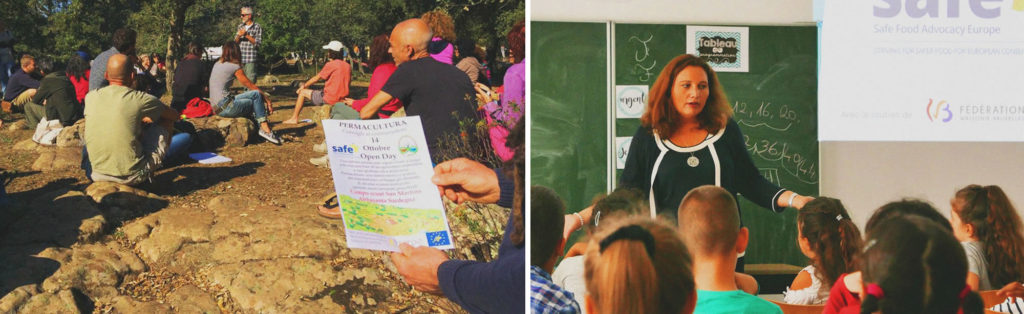
SAFE conducts food trainings in schools since 2017, where pupils are taught how to identify foods that are high in sugar, salt, and fat, and are given tips to help them shift towards healthier diets, under the European Commission’s Food4Inclusion programme and, previously, the TAO (Tackling Adolescent Obesity) project. More than 5,000 children have taken part in them by the end of 2025.