Workshop: discussing alternative proteins as a part of EPIC SHIFT
08 July 2025
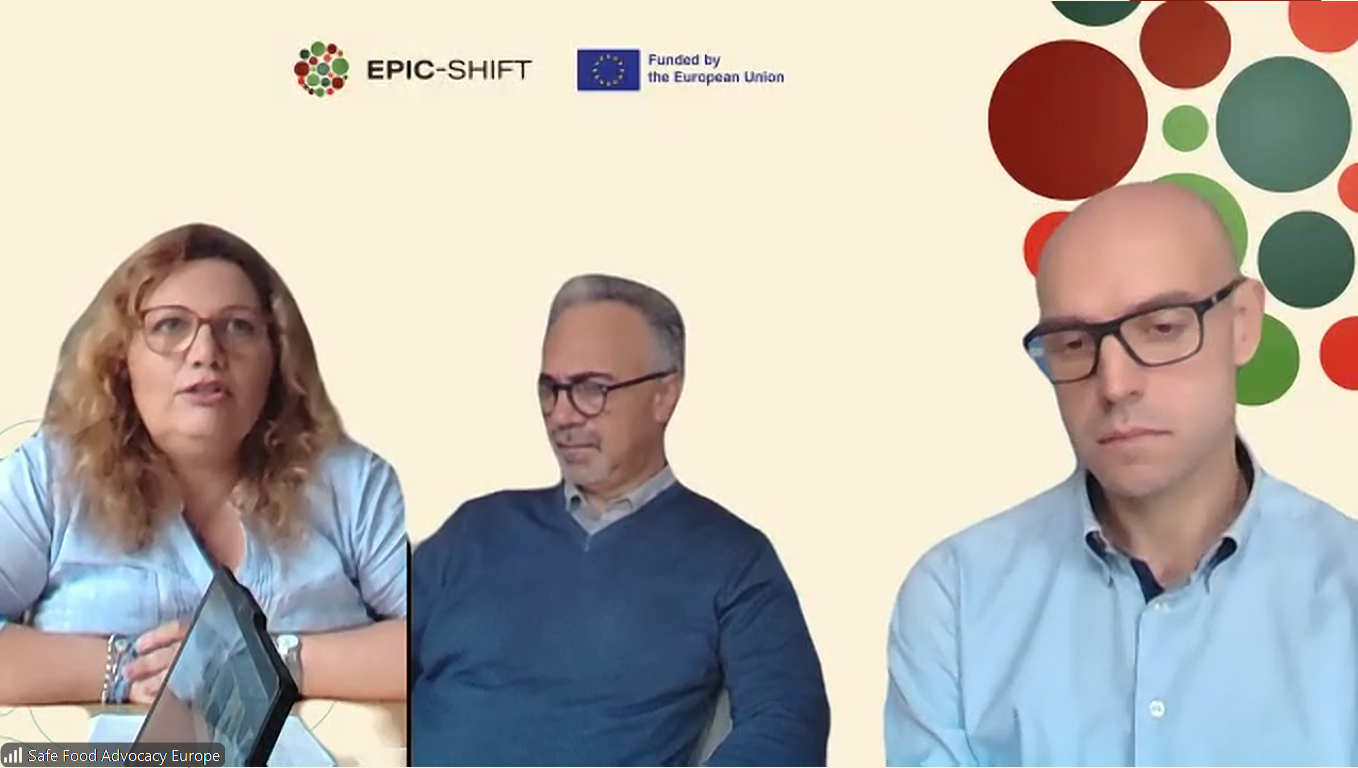
On 8 July, SAFE organised a workshop on alternative proteins and the social and economic barriers they encounter, as a part of SAFE’s project EPIC-SHIFT. This Horizon EU-funded project aims to explore alternative proteins and their acceptance by the public.
The online workshop was attended by over 70 people. There were 12 panelists, including representatives of the European Commission, of the European Food Safety Authority, several SAFE members, and other national organisations, including project coordinator Lund University.
Secretary General of SAFE, Floriana Cimmarusti, underlined the need for consumers to have clear and accurate information in the labeling of products containing novel food- based proteins. This is a basic demand to protect consumers. Quoting the SAFE’s motto: “Without information, there is no choice”. SAFE’s Deputy Director, Luigi Tozzi, highlighted the importance of traceability, once food containing novel foods is authorized to enter the market.
Deniz Koca, from Lund University, explained the work packages and general structure of the EPIC SHIFT project.
El-Fatih Abu-Samra took the floor to explain the European Commission’s strategy on protein diversification and its high priority for DG AGRI, both for sustainability and to reduce the EU’s import dependency.
Giuseppina Luvara, from DG Research and Innovation went through the priorities of the Food 2030 policy framework, which include alternative proteins.
Ermolaos Ververis, from the European Food Safety Authority (EFSA), mentioned the criteria used for EFSA’s scientific assessments. All novel foods must be safe under the proposed conditions of use and cannot be nutritionally disadvantageous.
Federica Di Maria, from CREA, an Italian research organization dedicated to the agri-food supply chains shared data from their survey by Appinio market research on 548 Italian men and women about their perceptions, awareness, and willingness to shift towards plant-based diets for the sake of sustainability. 60% of the sample are ready to move towards plant-based proteins and reduce their meat consumption — with young people and women more likely to do it — although 50% would never entirely abandon meat. A key insight is that openness to plant-based diets correlates with higher education but not higher relative income.
Carolin Loerchner, from the Federal Office of Food Safety and Consumer Protection, explained the novel food authorisation procedure in Germany.
There was time for an open discussion including some of SAFE’s members: Tanja Popovic Filipovic, from CEIP (Croatia), Anastasia Chatzipavlou (EEKE, Greece), Louise Johansen (Vegetarian Society of Denmark), and Andrej Velchev, from Affordable and Quality Food (Bulgaria).
In sum, it was a very useful discussion on how to shape sustainable food systems for the future.